
Table of Contents
Choosing a reputable Westie breeder matters more than choosing the puppy. A West Highland White Terrier can share your home for 12 to 15 years, and where it starts life shapes its health, temperament, and confidence for all of them.
This guide covers what a good breeder does, the questions to ask, and the warning signs that should make you walk away. Whether you’re looking at your first litter or your fifth, a little homework now can save you heartache, and a lot of money, later. By the end, you’ll know how to spot a reputable Westie breeder, how to check one out, and what to expect once you’ve found one.
Why Choosing a Reputable Westie Breeder Matters
Puppies look equally adorable in photos, which is exactly why the breeder is the part you have to investigate. Two Westie puppies of the same age can have very different starts in life. One may come from health-tested parents, grow up in a home with gentle handling, and go to a new family with records and a written guarantee. Another may come from untested parents, spend its early weeks in a crowded or neglected setting, and arrive with little more than a price tag.
A reputable Westie breeder plans each litter with purpose, cares for the mother and puppies as individuals, and stays in touch long after the puppy goes home. That commitment shows up later as a healthier dog, fewer behavior surprises, and a person you can call when you have questions at 9 p.m. on a Tuesday.
What a Reputable Westie Breeder Does
Here are the habits that set a reputable Westie breeder apart.
Health Tests the Parents
Responsible breeders screen breeding dogs for conditions known in the breed before pairing them. Ask which tests were done and to see the results. Breeders and breed clubs commonly discuss screening such as hip, kneecap, and eye evaluations, along with DNA tests for inherited conditions seen in Westies. Because recommendations change, check the current guidance from the West Highland White Terrier Club of America and ask the breeder to explain what each test means.
Raises Puppies in the Home
Puppies who grow up around everyday sights and sounds (the vacuum, the doorbell, children, visitors) tend to be more confident and adjust faster to new homes. At West Coast Westies, our puppies are raised underfoot in our living room. A reputable Westie breeder can describe a puppy’s daily life in detail, from sleeping arrangements to the first solid meals.
Lets You Meet the Parents
You should be able to see mom, and dad or photos and information about him, in person or by video. Her temperament is a good preview of what to expect. If a mother is anxious, aggressive, or kept out of sight, that’s information worth having before you fall in love with her puppies.
Provides Veterinary Care and Records
Vaccinations, deworming, and a vet check should be documented before a puppy goes home. A reputable Westie breeder hands you paperwork you can take straight to your own veterinarian, so your puppy’s care continues without gaps.
Offers a Written Contract and Health Guarantee
Everything should be in writing, including what’s covered and what happens if a health problem appears. Read the contract before you pay a deposit, and ask about anything that isn’t clear.
Doesn’t Rush You
A good breeder asks you questions too, about your home, schedule, and experience with dogs. If they sell a puppy to anyone with a credit card, be cautious. A reputable Westie breeder wants to know the puppy is going to the right place, and that often means a few conversations before anything is reserved.
Stays in Your Life
Reputable breeders answer questions for the life of the dog, and many require you to return the dog to them if you can ever no longer keep it. That promise says a lot about how a breeder sees their puppies: as lifelong responsibilities, not inventory.
Questions to Ask a Reputable Westie Breeder Before You Reserve
Bring this list to your first call or email. The answers matter, and so does how willingly they’re given.
- What health testing have the parents had, and can I see the results? Ask for copies, not just a promise.
- Where are the puppies raised, and can I see them or their living area? Photos, video calls, or a visit all help.
- At what age do puppies go home? Eight weeks or older is standard.
- What vaccinations and vet care will my puppy have received? You want dates and records.
- What does your health guarantee cover, and how long does it last? Look for specifics, not general reassurance.
- What registration papers come with the puppy? Ask which registry and whether papers are included.
- What happens if I can’t keep the dog? A good breeder has a clear answer.
- How many litters do you have each year? Fewer litters usually means more attention for each one.
- What deposit do you require, and is it refundable? Get the terms in writing.
- Will you be available for questions after I take my puppy home? Support after pickup is a sign of care.
A reputable Westie breeder is happy to answer every one of these, usually in detail.
Red Flags: How to Tell It’s Not a Reputable Westie Breeder
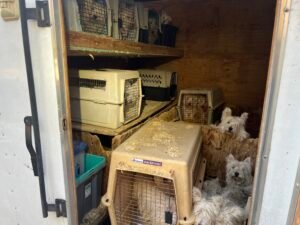
Most problem sellers give themselves away in a few ways. If you notice any of these, slow down or walk away.
- No visits. Anyone who won’t show you the puppies or their mother has something to hide.
- Pressure to pay immediately, especially without answering all your questions.
- Prices far below market. Our guide to Westie puppy prices explains what to expect.
- No health records or guarantee.
- Puppies available all the time. Responsible breeders usually have waitlists, not a constant supply.
- Several breeds for sale. Breeders who focus on one breed know it better.
- Puppies sent home before 8 weeks.
- Vague answers about the parents.
- Selling through pet stores or online marketplaces where you can’t meet the breeder.
One red flag may have an innocent explanation, so ask about it. Several together are a strong signal that you aren’t dealing with a reputable Westie breeder, and you’re better off continuing your search.
Where to Look for Reputable Westie Breeders
- Kennel club referrals. The American Kennel Club lists member breeders and a code of ethics.
- Veterinarians in your area often know breeders they trust.
- Breeder websites with real photos, named dogs, and health information, like this one: West Coast Westies.
- Past buyers. Ask a breeder for references from families who’ve taken puppies home.
Online directories can be a starting point, but a listing alone doesn’t prove a breeder is reputable. Treat every source the same way: contact the breeder, ask the questions above, and see for yourself.
How to Vet a Reputable Westie Breeder, Step by Step
Once you have a few names, a simple process helps you compare them.
- Read their website carefully. Look for named parents, real photos, clear pricing, and written policies. Vague or stock-photo-heavy sites deserve extra questions.
- Reach out with specific questions. Use the list above. Notice how quickly and thoroughly they reply.
- Ask for a video call or visit. Seeing the mother and the puppies in their home environment is one of the most informative steps.
- Request records. Health test results, vaccination records, and registration details should be available.
- Read the contract. Understand the guarantee, deposit, and return terms before you pay anything.
- Trust your instincts. A reputable Westie breeder makes you feel informed and welcome, never rushed or confused.
Understanding Registration Papers and Health Records
Many buyers hear “AKC registered” and assume it settles every question. Registration is useful, because it documents your puppy’s parents and lineage and confirms the puppy is a purebred West Highland White Terrier. What it doesn’t do is tell you whether the parents were health tested, how the puppies were raised, or whether the breeder will support you after pickup. A registered puppy can still come from a poor breeding program, which is why the questions above matter as much as the paperwork.
Health records are a separate set of documents. Ask for the puppy’s vaccination and deworming dates, the veterinarian’s exam notes, and the microchip number if one has been placed. Keep everything together in a folder, and bring it to your first vet visit. If a breeder can’t produce clear records, treat that as a gap to resolve before you reserve, not after.
What to Do Before Your Puppy Comes Home
Once you’ve chosen a breeder and reserved a puppy, use the waiting weeks to get ready. Find a veterinarian near you and book a first visit for the days after pickup. Ask what your puppy has been eating, and buy the same food so the change in homes isn’t also a change in diet. Puppy-proof the spaces your puppy will use, set up a crate and a quiet resting spot, and agree as a household on who handles feeding, walks, and training.
It also helps to read up on grooming and basic training. Westies have a distinctive white double coat that needs regular brushing and professional grooming, and they respond best to patient, consistent, positive training. A little preparation makes the first weeks calmer for everyone, including your new puppy.
Is a Puppy From a Reputable Westie Breeder Better Than a Pet Store Puppy?
In most cases, yes. A reputable Westie breeder can tell you about the parents, raise puppies in a home, and provide health records and support. Pet stores usually can’t tell you where their puppies came from, who bred them, or how they were raised, and the puppies often arrive from large-scale sources you never see. If you can’t meet the breeder and the mother, that’s a reason for caution, however polished the store or website looks.
What Does a Reputable Westie Breeder Charge?
Prices vary, but most reputable breeders charge more than a puppy-mill price, because responsible breeding costs money: health testing, veterinary care, quality food, and a great deal of time. Very low prices can point to cut corners somewhere. Our puppies start at $2,000, and our price guide explains what’s included and what to budget for after you bring your puppy home.
What to Expect When You Work With Us
At West Coast Westies, every puppy is raised in our home, vet-checked, and sent home with a health guarantee. Our families join a waitlist, talk with us about what they’re looking for, and then reserve with a deposit. We hold ourselves to the same standards we’ve described in this guide, because we’d want you to ask us every one of these questions. We’re always available to answer questions, before and long after your puppy comes home.
If you’d like to understand how our process works from the first form to pickup day, read our guide to the Westie puppy waitlist. And if you’re still deciding whether the breed suits your household, our post on whether Westies make good family dogs covers temperament, training, and grooming.
Meet Our Current Litter
Our current litter, Litter A, includes Alfie, Anny, and Abby: two girls and one boy, born September 4th and ready to go home October 30th. You can follow their progress week by week, and ask us anything about how they’re raised, because a reputable Westie breeder should welcome those questions.
Meet Litter A · Join the waitlist
Frequently Asked Questions About Choosing a Reputable Westie Breeder
How do I know if a Westie breeder is legitimate?
Look for health testing on the parents, the chance to meet the puppies and mother, a written contract, and a breeder who asks you questions in return.
What makes a breeder a reputable Westie breeder?
A reputable Westie breeder health tests the parents, raises puppies in the home, keeps records, provides a written contract and health guarantee, and supports families for the life of the dog.
How long should I expect to wait for a puppy?
Reputable breeders usually keep waitlists, and wait times vary by litter.
Should I be able to visit the breeder?
Ideally yes. If an in-person visit isn’t possible, a live video call showing the puppies and mother is a reasonable alternative.
Is a puppy from a breeder better than one from a pet store?
Breeders can tell you about the parents, raise puppies in a home, and provide health records and support. Pet stores usually can’t tell you where their puppies came from.
What’s a fair price for a Westie from a good breeder?
It varies, but most reputable breeders charge more than a puppy-mill price. Ours start at $2,000, and our price guide explains what’s included.
Ready to talk with a reputable Westie breeder about your family? Complete our Puppy Info Request form, and we’ll answer your questions and help you decide whether a Westie is the right fit.